


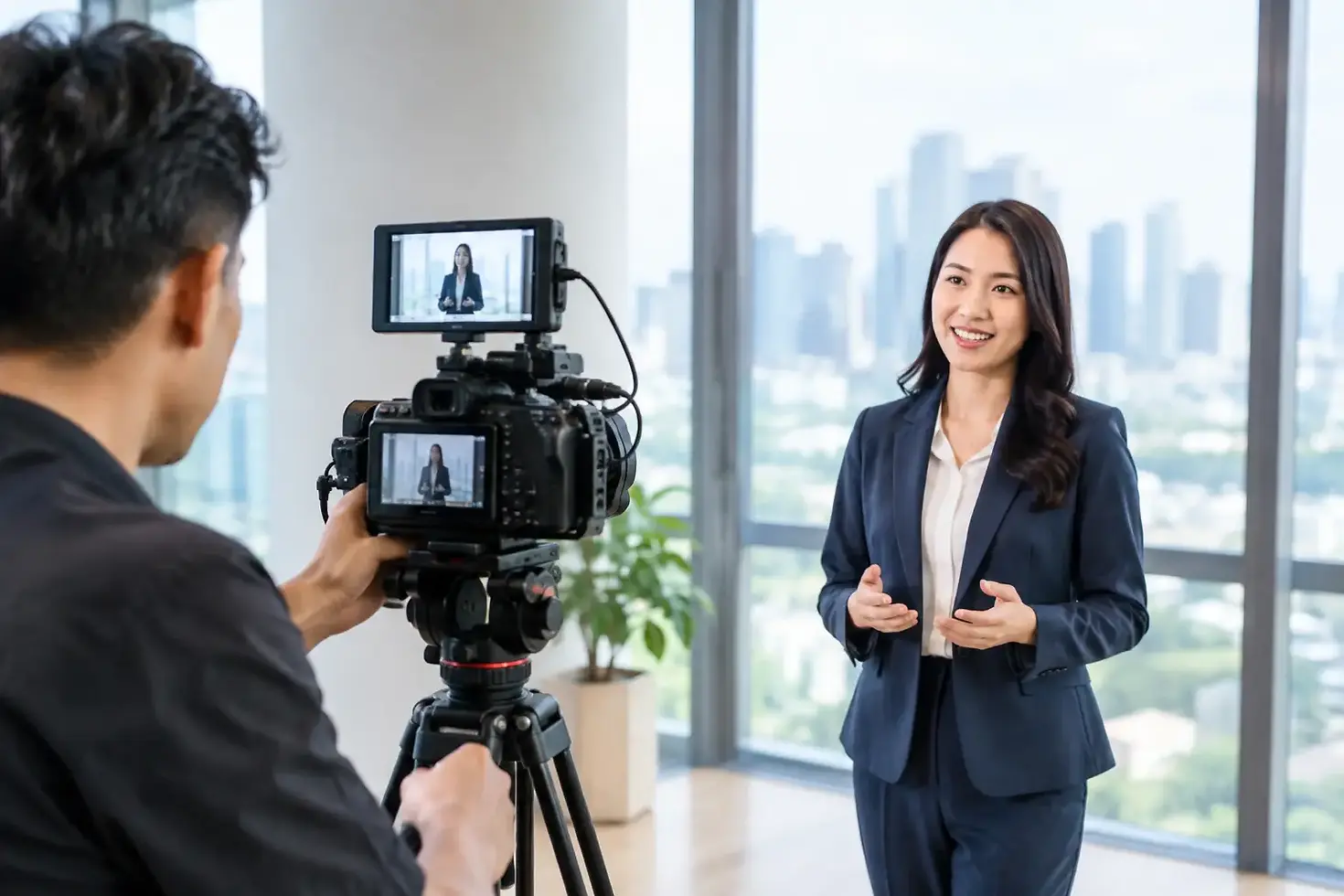
Corporate Video Production Singapore: What Works
A corporate film has a short window to earn attention and an even shorter window to prove it is worth watching. For organizations investing in corporate video production Singapore audiences will actually remember, the question is not simply whether the footage looks polished. It is whether the film makes a complex message easier to understand, strengthens trust, and gives viewers a clear reason to act.
That standard changes how a video should be planned. A company profile that tries to say everything can feel generic. A campaign film that chases a trend without a strategic message may win a few views but fail to support the brand. The strongest corporate videos are built around a specific communications job, then shaped for the people and platforms that matter.
Start With the Business Problem, Not the Camera
Video is often requested after a team has identified a broader challenge: a new service is difficult to explain, recruitment is becoming more competitive, employees need to align around a change, or a brand needs stronger visibility in a crowded category. Starting with that problem gives production decisions a purpose.
Before discussing visual references, define what needs to change after someone watches. A marketing team may need more qualified inquiries. A communications leader may need employees to understand why a transformation matters. A healthcare organization may need to make a sensitive subject feel human and accessible without sacrificing accuracy. These objectives require different stories, pacing, distribution plans, and measures of success.
A useful brief answers four questions in plain language: Who needs to see this? What should they understand, feel, or do? What proof will make the message believable? Where will they encounter the video? If those answers are vague, the creative process becomes a cycle of subjective feedback. If they are clear, everyone can assess ideas against the same goal.
Choose a Format That Fits the Message
There is no single corporate video format that works for every organization. The right choice depends on the audience's existing knowledge, the decision they are being asked to make, and the level of trust required.
A brand film is useful when perception is the challenge. It can bring together purpose, people, and customer value in a way a presentation deck cannot. However, it should not be treated as a catch-all solution. If the audience needs to understand a technical process or compare service options, an explainer or product-focused film may do more practical work.
Interview-led videos are often effective for leadership communications, testimonials, impact stories, and institutional messaging. A credible subject speaking with clarity can carry more weight than a heavily scripted voiceover. The trade-off is that interviews need preparation. The best responses are not memorized, but speakers should understand the core message, likely questions, and the audience they are addressing.
For social and campaign use, short-form cutdowns can be as valuable as the main film. A 60- to 90-second video may introduce the story, while vertical edits for LinkedIn, Instagram Reels, TikTok, or YouTube Shorts can spotlight one insight, one testimonial moment, or one customer problem at a time. This is not merely resizing a horizontal video. Each version should be edited for how people actually watch on that platform.
What Corporate Video Production in Singapore Requires
Corporate video production in Singapore often involves multiple stakeholders, active workplaces, and high expectations around brand governance. A smooth process depends as much on planning and coordination as it does on creative ability.
Pre-production is where the costly surprises are avoided. This stage should establish the audience, message hierarchy, concept, script direction, production schedule, shoot locations, interview subjects, approvals, wardrobe considerations, music direction, and final deliverables. For an industrial site, healthcare setting, school, or live operational environment, access and safety requirements must be factored in early rather than treated as day-of details.
The most productive creative partners also ask questions that may sit outside a conventional production checklist. What claims can the organization substantiate? Are there legal, compliance, privacy, or accessibility requirements? Which visual elements must align with an existing campaign? Who has final approval, and what does the review process look like internally? Clear answers protect both the timeline and the quality of the final story.
Filming days should feel organized without making people feel overly managed. Many executives, staff members, customers, and community participants are not professional performers. A well-run crew creates enough structure to capture strong material while giving people room to speak naturally. That balance is especially important when authenticity is central to the message.
Make One Production Work Harder
A primary video is rarely the only asset an organization needs. Planning for multiple deliverables from the outset helps a production deliver more value without forcing a separate shoot for every channel.
A launch campaign, for example, may include a hero film for a website or event screen, shorter edits for paid and organic social, vertical versions for mobile viewing, interview clips for LinkedIn, still frames for campaign graphics, and a concise internal version for employee communications. The footage is related, but each deliverable has a different role.
This approach also improves brand consistency. Rather than producing disconnected content throughout the year, an organization can create a recognizable visual and editorial system across recruitment, customer marketing, thought leadership, and internal communications. That does not mean every video should look identical. It means the audience can recognize the same level of care, clarity, and point of view.
The right scope depends on the campaign. A single high-stakes brand film may justify extensive concept development and a larger production. A recurring social series may benefit from a more efficient format with repeatable setup, graphics, and editing conventions. Neither approach is automatically better. The decision should reflect expected reach, message complexity, content lifespan, and the consequence of getting the message wrong.
Judge Quality Beyond the Highlight Reel
Cinematography, sound, editing, and motion graphics shape perception. They matter because viewers make quick judgments about an organization's credibility. But visual polish alone is not a reliable measure of effectiveness.
Ask whether the opening gives the intended audience a reason to continue. Ask whether the central message is clear without relying on supporting copy. Ask whether the proof feels specific, whether the call to action matches the viewer's stage of decision-making, and whether the final delivery is ready for the channels where it will live.
Performance metrics should reflect the video's actual purpose. Awareness work may be evaluated through reach, completed views, brand-lift signals, or share of attention. A demand-generation video may be judged by landing-page engagement, inquiries, or conversion quality. Internal communications may call for completion rates, employee feedback, or reduced repeat questions. One view count cannot tell the whole story.
This is why production should be treated as part of a marketing and communications system, not a standalone creative purchase. The script influences clarity. The distribution plan influences the edit. The follow-up experience influences conversion. When these pieces are planned together, a film has a better chance of producing a useful business outcome.
Build a Partnership That Gets Smarter Over Time
A production partner should be able to guide creative decisions while respecting the knowledge already inside your organization. Your team understands the business, customers, and internal realities. The production team brings story structure, audience perspective, and executional discipline. The best work comes from combining both.
Look for transparent scoping rather than preset assumptions. A clear proposal should explain the creative approach, production requirements, deliverables, timeline, and what is included in post-production. It should also make room for practical questions about approvals, revisions, filming logistics, and future asset needs.
At Nookcha Films, that collaborative approach means treating each brief as a communications opportunity rather than a request for attractive footage. The aim is to create work that holds attention while staying connected to visibility, message clarity, audience response, and the broader goals behind the campaign.
The next time a video request lands on your desk, begin with the conversation your audience needs to have after watching. Once that is clear, the right story, format, and production plan become much easier to build.


Comments