


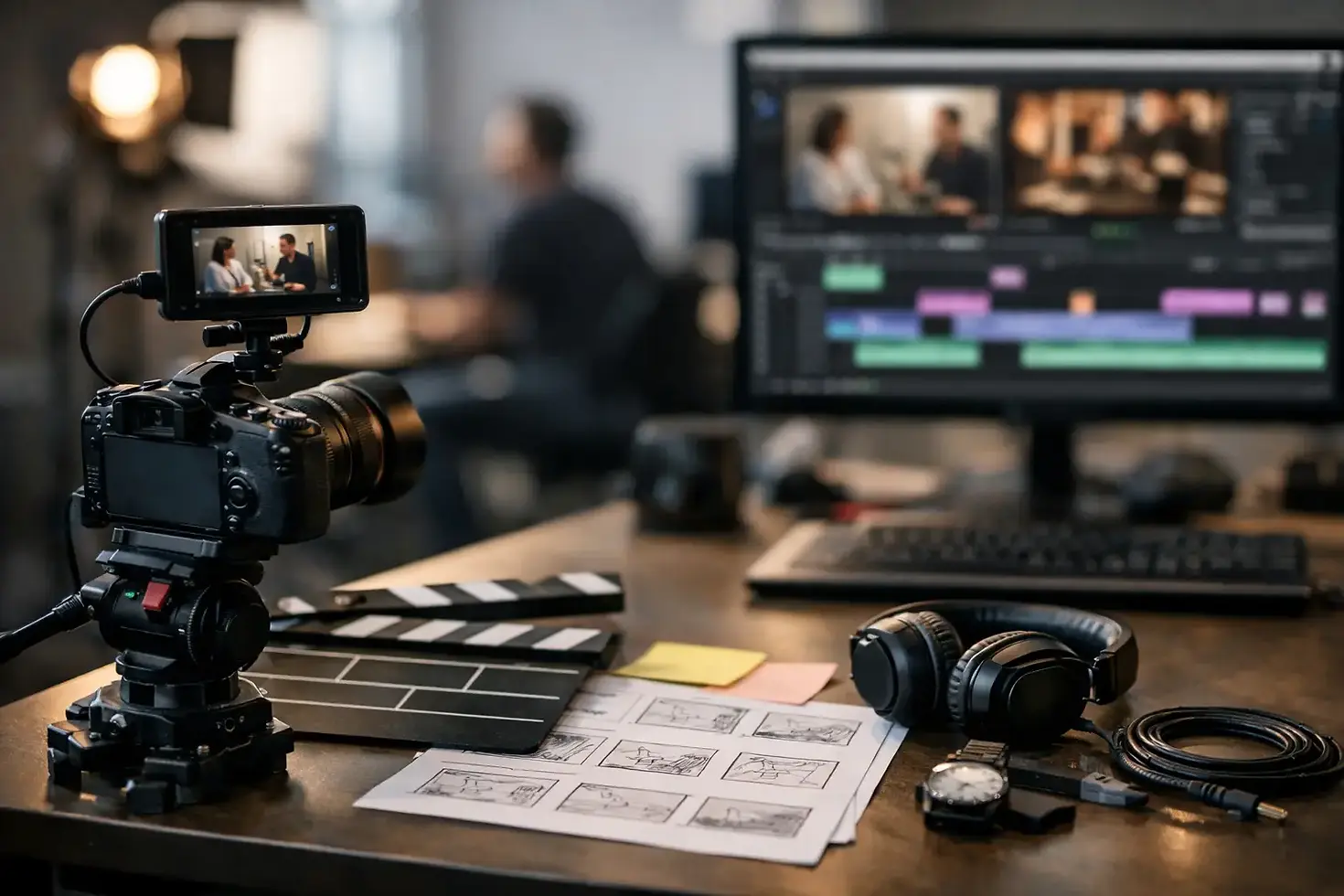
A Realistic Video Production Timeline
A campaign can have a firm launch date, a strong media plan, and full stakeholder support, then still lose momentum because the video production timeline was treated as a filming date plus a few days for editing. The work starts well before cameras roll, and the strongest results come from giving strategy, approvals, and refinement the time they need.
For marketing and communications teams, the goal is not to make production feel slower. It is to make it predictable. A well-planned timeline protects your launch window while allowing the creative team to build a video that is clear, credible, on-brand, and designed for the way your audience actually watches.
What a video production timeline should include
A video production timeline maps every decision required to move from a business objective to published content. That includes discovery, concept development, scripting, logistics, filming, editing, feedback, final delivery, and platform preparation.
For a straightforward corporate interview or testimonial, the full process may take three to five weeks. A campaign film, commercial, multi-location brand story, or video involving senior stakeholders, talent, custom graphics, or compliance reviews often needs six to 10 weeks. Larger productions can take longer, particularly when they require multiple filming days, animation, original music, or a coordinated paid-media rollout.
The right schedule depends less on video length than on production complexity. A 60-second commercial can require more planning and post-production than a 10-minute internal communications film. The questions that matter are: How many people need to approve the work? Are locations, talent, products, or leaders available? Is the message already clear? And how many versions will the campaign need?
Phase 1: Strategy and creative development
Most effective projects begin with one to two weeks of discovery and creative development. This is where a production partner gets aligned with your audience, brand voice, communication challenge, campaign channels, and desired action.
A video should not begin with, “What would look good?” It should begin with, “What does our audience need to understand, feel, or do after watching?” For a healthcare organization, that may mean building trust around a sensitive service. For a B2B company, it may mean making a technical offer easier to grasp. For an employer brand campaign, it may mean showing culture without relying on generic claims.
From there, the creative direction takes shape. Depending on the project, this can include a treatment, story structure, interview approach, key visual references, draft script, storyboard, and recommendations for cutdowns or social-first versions. Internal alignment at this stage saves time later. If decision-makers disagree about the core message after filming, revisions become more expensive and less effective.
What can slow this phase down
The common issue is not creativity. It is unclear ownership. When five stakeholders provide separate feedback without one person consolidating it, a one-week review can become three. Assign a project lead who can gather input, resolve conflicting comments, and return one clear set of decisions to the production team.
Phase 2: Pre-production and planning
Pre-production typically takes one to three weeks, sometimes overlapping with creative development. This is the operational work that makes a shoot day efficient rather than stressful.
The team confirms filming locations, crew, equipment, cast or interview subjects, permits, schedules, wardrobe, props, shot lists, and contingency plans. For corporate productions, it also means briefing executives or employees who will appear on camera, coordinating site access, and identifying any safety, legal, or confidentiality requirements.
A location that looks ideal may have noisy air conditioning, restricted access hours, limited power, or poor natural light. A senior leader may be available for only 30 minutes. These realities do not make a project impossible, but they need to be known early enough to plan around them.
This phase is also the right time to confirm deliverables. A hero film for a website or event screen may need horizontal 16:9 framing, while LinkedIn, Instagram Reels, TikTok, and paid social placements can call for vertical 9:16 edits, square versions, captions, and shorter hooks. Planning those assets before filming is more efficient than trying to recreate them from limited footage later.
Phase 3: Filming day or filming days
A single shoot day can produce a surprising amount of content when the scope is focused. For example, one executive interview, supporting workplace footage, and product or service visuals can support a main corporate film plus shorter social edits.
The schedule should still leave room for reality. People need time to settle in on camera. A location may need to be reset. An interview answer might reveal a better story direction, making it worth capturing additional supporting footage. Trying to schedule every minute tightly can create the appearance of efficiency while reducing the quality of what is captured.
For multi-day shoots, allow time to review footage and adjust the next day’s priorities. This is especially valuable for documentaries, case studies, event coverage, or stories involving real people rather than scripted performers. The best moments are not always the ones that appeared in the original shot list.
Phase 4: Editing, feedback, and refinement
Post-production is often allocated two to four weeks, depending on the number of deliverables and level of finish. Editors organize footage, build a first cut, select music, clean audio, color-correct footage, create graphics, add captions, and prepare final exports.
The first cut is a meaningful milestone, not a nearly finished file that needs only cosmetic input. It is where the story becomes visible. Early feedback should focus on message clarity, narrative order, brand fit, and whether the intended audience will understand the point quickly. Detailed requests on typography, frame choices, or sound levels are more useful after the story itself is agreed upon.
A practical review process normally includes two structured rounds of consolidated feedback. More rounds may be appropriate for regulated industries or large organizations, but they should be planned from the start. Extra changes are not inherently a problem. They simply affect the schedule, particularly when they require new animation, reshoots, revised voiceover, or approval from another department.
At Nookcha Films, we treat this stage as a working partnership, not a handoff. Your team knows the internal context, while the production team protects the story, pacing, and audience experience. The strongest feedback process gives both perspectives room to do their job.
Phase 5: Delivery and campaign readiness
Final export can take several days once the edit is approved. That time covers mastering files in the right formats, caption checks, aspect-ratio versions, thumbnail selection, and quality control across devices. If the video will run as advertising, platform specifications, copy, audience targeting, and media booking may add another layer of coordination.
Do not schedule launch day for the same day you expect final files. Build in a buffer of at least several business days. This gives your team time to upload content, test landing pages, prepare organic posts, secure final legal clearance, and address any last technical issue without jeopardizing the campaign.
How to keep the schedule moving
A realistic schedule needs committed decisions from both sides. Start by sharing the non-negotiables: launch date, budget range, required deliverables, key stakeholders, and any dates when locations or spokespeople are unavailable. The earlier a production partner understands these constraints, the more creatively they can solve for them.
It also helps to separate urgent from important. A video needed for an event next month may require a simpler concept, fewer locations, and a tightly managed approval path. That does not mean settling for bland work. It means concentrating effort on the message and scenes that will make the greatest difference to the audience.
If your campaign has more flexibility, use the time intentionally. Invest in research, stronger interview preparation, purposeful visual planning, and cutdowns designed for each channel. Those decisions often have a greater impact on visibility, comprehension, and inquiries than adding more production complexity.
The best time to begin planning is before the calendar becomes urgent. Give your story enough room to be considered, shaped, and refined, and your final video has a far better chance of earning attention after it goes live.


Comments